
Ever Legion
VoyagerOne IERole Playing
4.54.51K Reviews
- Version
- 0.5.292
- Installs
- 1.00M
- Age Rating
- Teen
Screenshots
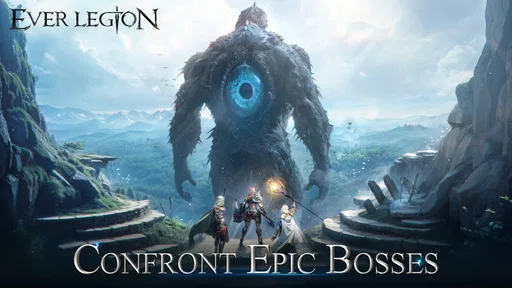
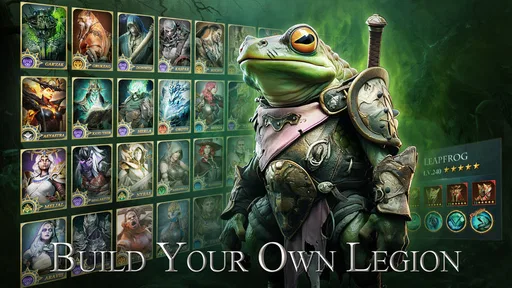
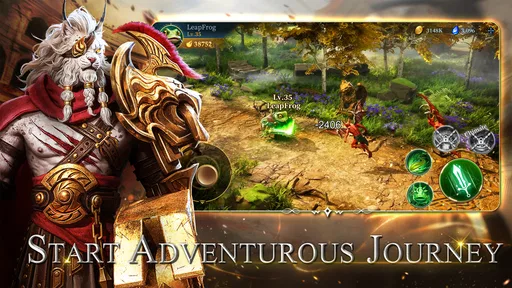
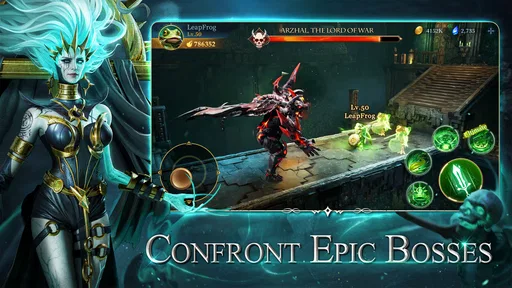
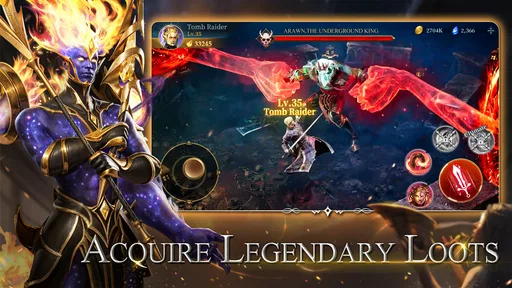
Our Review of Ever Legion
 Analysis by Appyee
Ever Legion is a free role-playing game that I found easiest to appreciate when I treated the opening as a guided fantasy adventure rather than a game I needed to master immediately. Its central appeal is the feeling of building momentum: you begin with a small amount to manage, learn the rhythm of the journey, and gradually make more meaningful choices about progress. The fantasy setting gives those choices a clear purpose, while the role-playing format makes the experience more involving than a simple sequence of battles.
Developed by VoyagerOne IE, the game has attracted over a million installs and holds a 4.5 average from around 73 thousand ratings. Those figures match my general impression: it is approachable enough for someone who is new to mobile role-playing games, but it still has enough layers to keep a returning player interested. I would not describe it as a completely hands-off experience, though. The early guidance is useful, yet the game becomes more rewarding once I started paying attention to how I spent resources and how I prepared for the next challenge.
Starting the journey without feeling lost
The first thing to expect is a fantasy adventure built around steady progression. The store summary promises a journey of magic and fantasy, but the more useful way to understand it is this: the game wants me to keep moving through a sequence of decisions, rewards, improvements, and encounters. It is not aimed at players who want a single short session with no long-term structure. Even when I only had a few minutes, I felt that the game was asking me to think about what my next useful improvement should be.
That makes the opening important. A new player can easily focus on tapping through the first available action and miss the broader lesson about priorities. I recommend slowing down during the first few stages and reading the purpose of each reward before spending anything. The early game is the best time to learn which improvements directly help the current obstacle and which ones are better saved for later.
The game is rated Teen, so I would not choose it automatically for a young child. For older players, the rating also signals that this is more than a purely decorative fantasy experience. The setting, battles, and progression are presented with a tone intended for a teenage audience and above. Parents deciding whether it is suitable should look at the game together with the child rather than assuming that a colorful fantasy style means it is aimed at everyone.
Installation is available at no purchase price, which makes it easy to try without committing money first. The current version is 0.5.292 and it requires Android 5.0 or later. I still suggest checking the device before starting a serious playthrough, especially if the phone is older. A game can install successfully and still feel less comfortable on a small or aging device, particularly when the interface presents several progression choices at once.
The first few minutes matter more than they seem
When I begin, I try not to treat every early reward as something that must be used immediately. My first useful habit is to identify the action that advances the current objective, then check whether the reward supports that same objective. This sounds simple, but it prevents a common beginner mistake: scattering improvements across too many options before the game has shown which ones matter most.
I also keep the opening tutorial in perspective. Guided steps are helpful for learning the controls and the general flow, but they do not necessarily explain the best long-term use of every resource. I follow the instructions to understand the system, then pause for a moment before confirming an optional purchase or upgrade. That small pause is especially valuable in a game with in-app purchases ranging from $0.99 to $99.99 per item.
My strongest beginner tip is to separate learning from spending. Complete the early guidance, see what the next hurdle requires, and only then decide whether a reward or purchase solves a real problem. A free game can be enjoyable without spending, but the presence of optional purchases means that impulse decisions are worth avoiding. If I were handing the game to a friend, I would suggest setting a personal spending limit before the first session rather than deciding in the middle of a difficult moment.
Finding the first meaningful success
The first meaningful success is not simply reaching the next screen. For me, it is completing an objective while understanding why the chosen improvement helped. That distinction changes the way I play. Instead of rushing through each prompt, I look at the obstacle, identify the most relevant response, and then check the result. Once that loop makes sense, the game feels far less mysterious.
A practical first-session routine is to finish the guided sequence, review the available progression choices, and then attempt the next challenge without immediately buying assistance. If the attempt works, I have learned something about the game’s expected pace. If it fails, the result is still useful because it shows which part of my preparation needs attention. I prefer this approach to spending first and asking questions later.
Another helpful habit is to keep a mental note of what caused difficulty. Was the problem that my current strength was too low, that I selected an unsuitable improvement, or that I simply moved forward before collecting everything available? These are different problems, and treating them as the same can waste time. The game becomes more manageable when I use each setback as information rather than as a reason to tap through menus randomly.
This is also where the role-playing design starts to separate the game from a basic fantasy clicker. Progress is not only about watching numbers rise. I am deciding how to prepare for what comes next, and those small decisions give the journey a personal shape. The system may still feel accessible, but it rewards attention more than mindless repetition.
What commonly confuses new players
The biggest source of confusion is the difference between immediate progress and useful progress. A button that produces a visible improvement can feel like the obvious choice, yet it may not address the next obstacle. I learned to ask a more practical question: will this help me overcome the next thing I am likely to face, or does it only make the current screen look better?
New players may also assume that every reward should be claimed and spent as soon as it appears. I would resist that instinct. Some rewards are more valuable when held until the game presents a clear need. Saving is not always the correct answer, but having a small reserve gives me room to respond when a challenge demands a particular improvement.
Another point of friction is the temptation to judge the game too quickly. The opening is designed to teach the basic rhythm, so it can feel more guided than the later experience. If I stopped after only the first handful of interactions, I would miss the part where my choices begin to matter more. At the same time, players who dislike gradual progression should know that this is not likely to become an entirely different type of game after installation.
The purchase system deserves a clear mention because it affects how I approach the interface. With individual in-app purchases priced from $0.99 up to $99.99, I pay attention to confirmation screens and avoid treating limited-time pressure as a reason to spend. The free entry point is a genuine advantage for trying the game, but the best experience comes from deciding in advance whether I want to remain completely free-to-play or make only occasional, deliberate purchases.
How I use it in an ordinary day
Ever Legion fits best into a routine where I can return to the same adventure several times rather than expecting one uninterrupted evening. For example, I might play during a commute break, complete the current objective, collect what I earned, and stop before making a rushed upgrade decision. Later, I can return with a clearer idea of what the next obstacle requires. This makes the game feel less demanding than a role-playing title that expects a long, uninterrupted session.
That routine also exposes one of its limitations. If I want a fast game with an obvious beginning and ending in ten minutes, the ongoing progression can feel like unfinished business. I may complete an action but still feel that the larger journey is waiting for another visit. Players who enjoy persistent development will see that as a strength; players who prefer self-contained rounds may find it tiring.
I would also avoid playing only while distracted. The game is approachable, but the useful decisions are easy to overlook when I am rapidly tapping through dialogue or rewards. A short focused session is better than a longer session in which I accept every prompt without checking its purpose.
Where it fits among role-playing games
Compared with a traditional console-style role-playing game, this is easier to pick up and less likely to demand a large block of free time. I do not need to remember a complicated story before every session, and the guided structure helps me return after a break. The trade-off is that the experience does not offer the same sense of uninterrupted exploration that I expect from a large, story-heavy adventure.
Compared with a competitive role-playing game, the appeal is different again. I am more concerned with improving my own journey than with proving that I can outplay another person in a live match. That makes it a better choice for someone who wants fantasy progression without the pressure of constant competition. On the other hand, players who need direct player-versus-player tension may find the journey less exciting than a game built around opponents and rankings.
It also sits between a casual tap-through game and a deeper strategy title. The controls and early guidance are friendly, but the progression choices still reward planning. I would recommend it to someone who wants more involvement than a purely automatic game provides, while warning a strategy enthusiast that it may not deliver the same level of complexity as a dedicated tactical role-playing game.
Making better progress after the tutorial
Once I understand the initial loop, I stop treating the tutorial as the main source of direction. I begin each session by checking my current objective, reviewing what I already have available, and deciding whether the next action should be advancement, preparation, or saving. This three-part check is more useful than simply choosing the most prominent button.
A second advanced habit is to avoid changing several variables at once. If I improve multiple areas and then succeed, I may not know what actually helped. When possible, I make one meaningful adjustment, test it against the next challenge, and use the outcome to guide the following decision. This makes the game easier to understand and reduces the feeling that success depends on luck.
I also recommend treating failed attempts as a signal to review the whole setup rather than immediately repeating the same action. Sometimes the answer is a stronger improvement, but sometimes the better answer is to collect an overlooked reward or choose a more relevant option. That distinction saves resources and gives the progression system more depth than it first appears to have.
For players who decide to spend, I would keep purchases connected to a specific goal. Buying something because the screen creates urgency is a weak reason; buying because it supports a planned milestone is easier to evaluate. I would never assume that the largest item is automatically the best value for my play style. The game is more enjoyable when purchases remain optional tools rather than becoming the way I measure progress.
Who should play and who should skip it
I think the game is a good match for first-time mobile role-playing players who want a fantasy setting, clear early guidance, and a progression path they can revisit in short sessions. It also suits players who enjoy making small improvement decisions and watching those decisions shape the next stage of a journey. The free starting price makes experimentation straightforward, provided the player is comfortable with optional purchases being part of the experience.
I would be more cautious recommending it to someone who wants a completely purchase-free interface, a self-contained story that ends quickly, or highly demanding tactical combat from the first minute. It is also not my first choice for a player who wants a competitive multiplayer focus. In those cases, a more specialized role-playing game may be a better fit.
The developer, VoyagerOne IE, has positioned the game around a broad fantasy adventure rather than a niche simulation. That accessibility is one of its strongest qualities, but it also means that experienced role-playing fans may need patience while the game introduces its systems. I found that patience worthwhile only after I started engaging with the choices instead of rushing through the opening.
My recommendation after settling into the journey
After spending time with it, I see Ever Legion as a welcoming fantasy role-playing game with enough progression to reward regular attention. Its best quality is the way it turns a simple first session into a series of manageable decisions: understand the current objective, improve with purpose, and return when the next step makes sense. That path is reassuring for a beginner because success does not require knowing everything immediately.
Its main friction comes from the same structure. Progress is gradual, the interface can encourage quick decisions, and optional purchases require self-control. The game is not ideal for someone searching for a short, fully contained adventure or a deeply competitive experience. I also would not recommend spending until I had played long enough to know whether the basic rhythm was enjoyable on its own.
For a first-time player, my advice is simple: install it, follow the opening guidance carefully, pause before spending, and judge each improvement by the obstacle it solves rather than by how impressive it looks. If that style of steady fantasy progression appeals to you, the game has a comfortable entry point and plenty of room to become a regular part of your mobile gaming routine. With its free access, Teen rating, and broad role-playing design, it is worth trying; just approach the purchases deliberately and let your own decisions, rather than the prompts on screen, control the pace.
Verdict
Strengths of Ever Legion
- Turn-based battles make team planning and timing feel rewarding.
- Large roster offers plenty of heroes to collect and experiment with.
- Idle rewards let you make progress even during short play sessions.
- Distinct factions add variety to team composition and combat strategy.
- Guild activities provide extra objectives and a stronger social element.
Limitations of Ever Legion
- Progress can become heavily dependent on obtaining duplicate heroes.
- Later stages may require frequent upgrades and resource grinding.
- Many features and currencies can feel overwhelming for new players.
- Competitive modes may favor players who spend regularly on premium items.
- The game requires a stable internet connection for most activities.
Other Releases by VoyagerOne IE
View All


Similar Picks in This Category
View All
Hair Dye
CrazyLabs LTD4.4

Monster High™ Beauty Salon
CrazyLabs LTD4.5

Bus Simulator - Bus Games 3D
Jima Apps4.4

Flight Pilot: 3D Simulator
Wildlife Studios4.1


Super Stylist Fashion Makeover
CrazyLabs LTD4.4
Frequently Asked Questions
What is Ever Legion, and what kind of game is it?
Ever Legion is a fantasy idle role-playing game focused on collecting heroes, building a balanced team, and progressing through campaign stages, quests, and other battles. You recruit characters from different factions and classes, improve their equipment and abilities, and use strategic formations to overcome enemies. Since battles can continue while you are away, it combines hands-on team management with automatic rewards and progression.
Can I play Ever Legion without spending money?
Yes, Ever Legion can be played for free, and the main progression systems are available without making a purchase. However, it includes optional in-app purchases that can provide premium currency, summoning opportunities, resource bundles, or other progression advantages. Free players may need more patience when upgrading heroes and completing difficult content, particularly later in the game, but regular rewards, events, and idle income help maintain steady progress.
Does Ever Legion require an internet connection?
Ever Legion generally requires an internet connection because the game synchronizes your account, processes rewards, supports events, and connects to online features. You may be able to view or interact with some parts of the game briefly during a connection interruption, but full functionality should not be expected offline. A stable Wi-Fi or mobile data connection is recommended, especially when claiming rewards or participating in competitive modes.
What should beginners know about hero upgrades and team building?
New players should avoid spreading resources across every character they obtain. It is usually more efficient to concentrate on a small core team with complementary roles, such as damage dealers, defenders, and support heroes. Pay attention to faction bonuses, positioning, skill effects, and hero compatibility rather than relying only on rarity. Before investing heavily, check which characters remain useful in the content you plan to play.
Is Ever Legion suitable for children, and does it contain purchases?
Ever Legion is presented as a fantasy strategy RPG, but parents should review the game’s age rating and store information before allowing younger players to download it. The game may include fantasy combat, randomized hero summoning, advertisements or promotional offers, and optional in-app purchases. To prevent accidental spending, enable parental controls and require authentication for purchases through the relevant Android or iOS account settings.
Play our best games!


